
Abilene Surgical Associates
Authority-first medical platform for an Oral & Maxillofacial Surgery practice serving West Texas — engineered for specialist search, mobile performance, and zero operational drag.

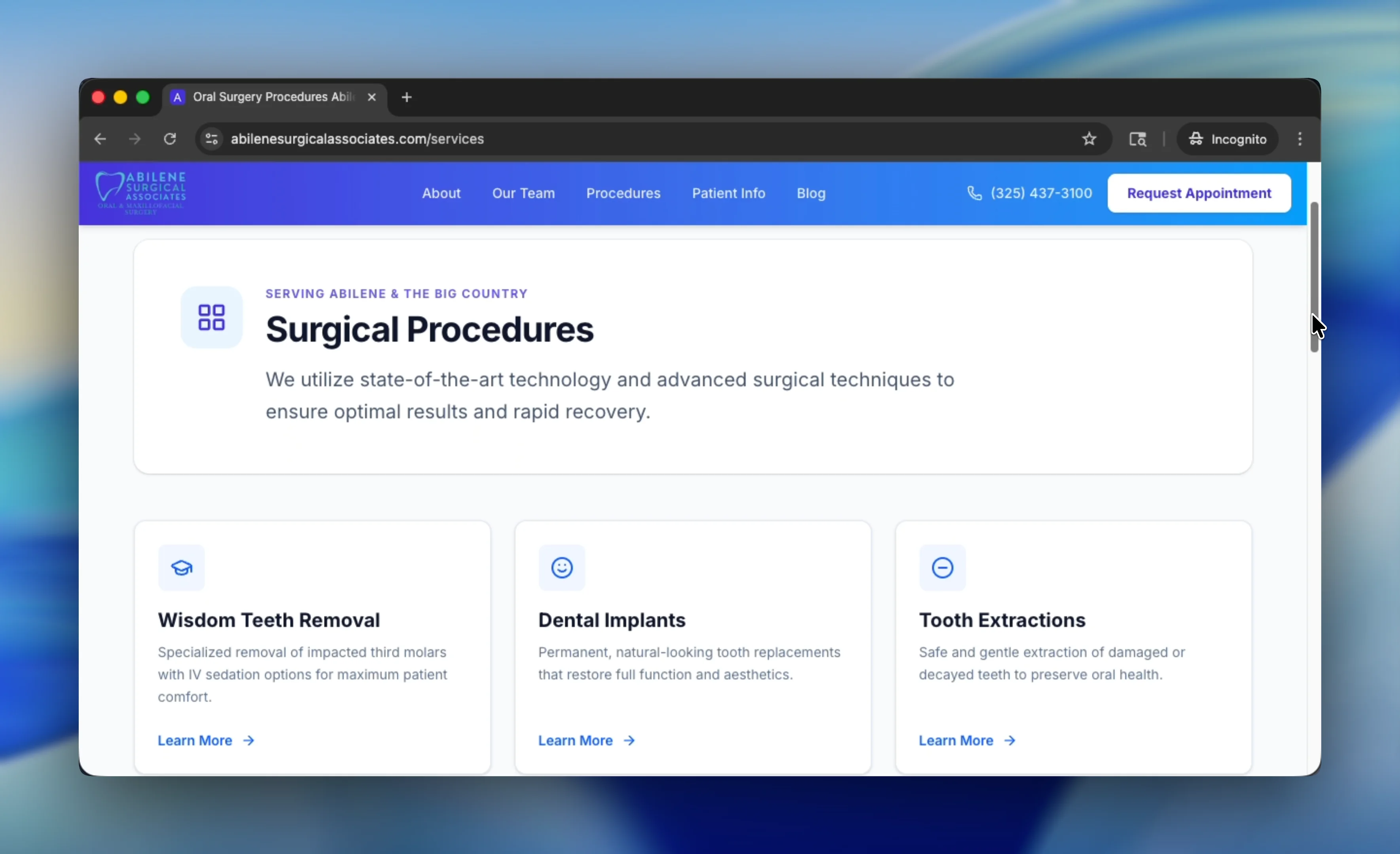
Primary procedures above the fold, geographic authority in the H1, clean nav hierarchy. No marketing copy competing with the conversion path.
A specialty practice competing without specialty infrastructure
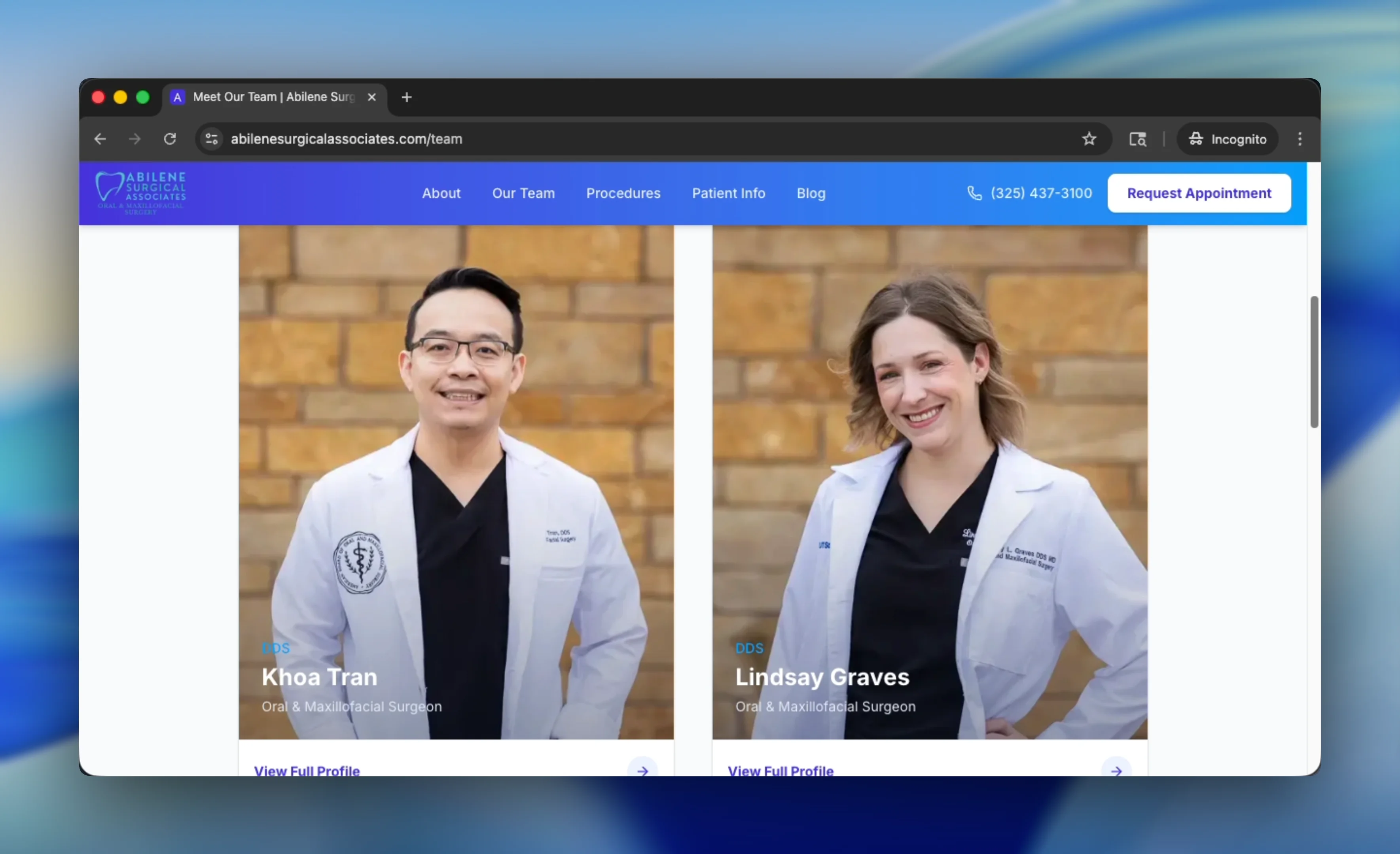
Abilene Surgical Associates is a multi-surgeon Oral & Maxillofacial Surgery practice with a large regional referral footprint in West Texas. Patients searching for specialist procedures — Wisdom Teeth Removal, Dental Implants, IV Sedation — were finding competitors with weaker credentials but better-structured platforms.
The practice needed a platform that matched their clinical standing: one that would perform for patients on mobile devices in rural West Texas, establish documented specialist authority for search engines, and operate without a content management system introducing ongoing maintenance risk.
Static-first, headless, zero CMS
The platform renders entirely at build time — no runtime CMS, no page builder, no plugin layer. Every public-facing route produces deterministic output that is edge-cached and globally consistent. There is no dynamic server logic on the public platform: delivery is fast by architecture, not by optimization after the fact. Content lives in version-controlled configuration, not in a database that can drift, break, or be exploited.
- ✓Static rendering — no SSR overhead on delivery
- ✓Edge-cached — consistent performance globally
- ✓Zero plugin surface area to maintain or exploit
- ✓Type-safe content at build time
- ✓Auditable, version-controlled — every change tracked
One page, one job
Every page in the platform serves a single, named intent. This is a structural decision — it affects crawl efficiency, keyword signal clarity, internal link architecture, and conversion path integrity. Pages that serve multiple intents dilute all of them.
Structured data as a platform layer, not a plugin
Structured data is embedded at build time as a first-class system component — not added post-launch via an SEO plugin. Plugin-based schema is fragile: it breaks on plugin updates, theme changes, and CMS schema conflicts. Build-time schema is permanent, auditable, and version-controlled alongside the rest of the platform. Three schema types are deployed across the platform, each serving a distinct authority signal.
What was chosen — and what was ruled out
A CMS introduces runtime overhead, plugin dependencies, and crawl ambiguity — all of which work against a medical authority platform. Static delivery is deterministic: every patient gets the same sub-second experience regardless of traffic load, and there is no plugin surface area to maintain or exploit.
Structured data added by plugin is fragile — it breaks on plugin updates, theme changes, and CMS schema conflicts. Building MedicalOrganization, LocalBusiness, and MedicalProcedure schema directly into the component layer means it is permanent, auditable, and version-controlled alongside the platform itself.
A hub-and-spoke structure forces multiple procedures to compete for the same crawl equity. Intent-scoped pages give each procedure a clean signal path, an unambiguous internal link target, and a single conversion goal — no keyword cannibalization, no structural dilution of the page's authority signal.